
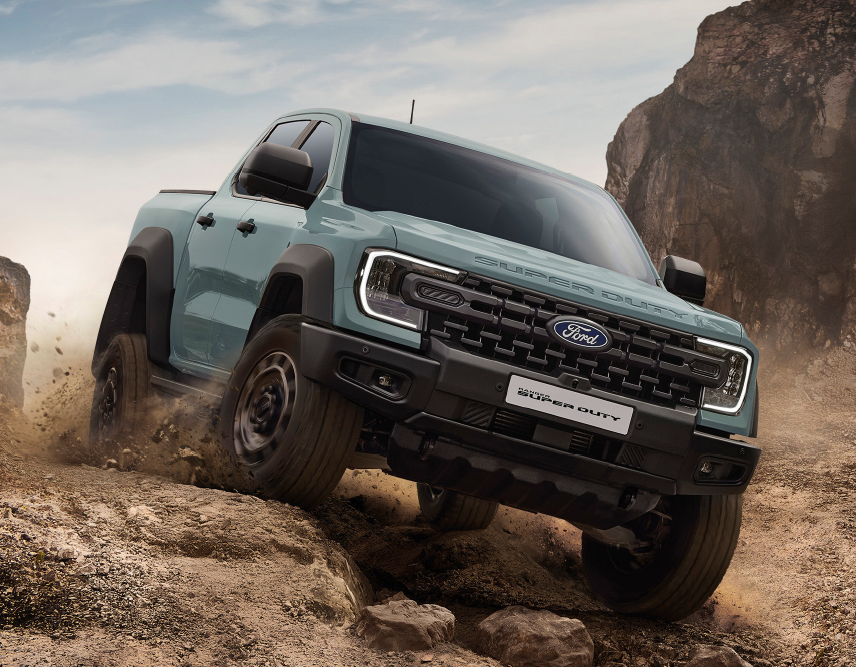
The Super Duty name carries a long history within Ford. It is reserved for vehicles designed to perform in demanding environments, handle extreme workloads, and tackle jobs that push conventional pickup truck to their limit.
The Ford Ranger Super Duty has been developed to address a common challenge for fleet operators: carrying and towing more without the cost and complexity of moving into a larger truck category. Built on the latest Ranger platform, it combines modern safety, comfort, and technology with capability figures that stand out in the mid-size pickup segment.
Here are five features that make Ranger Super Duty worth a closer look.
1. Superior Towing
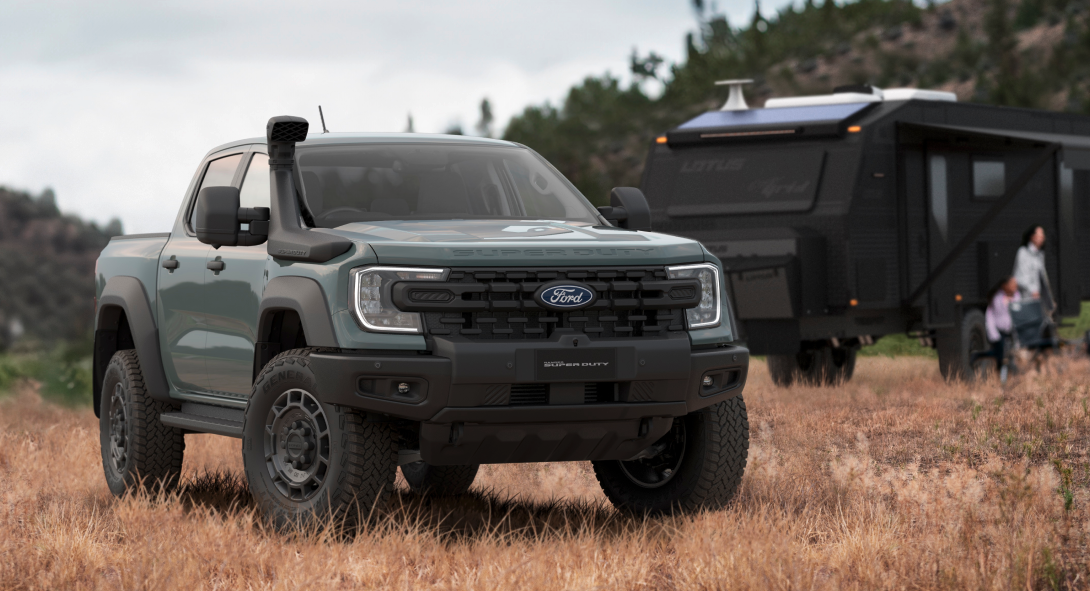
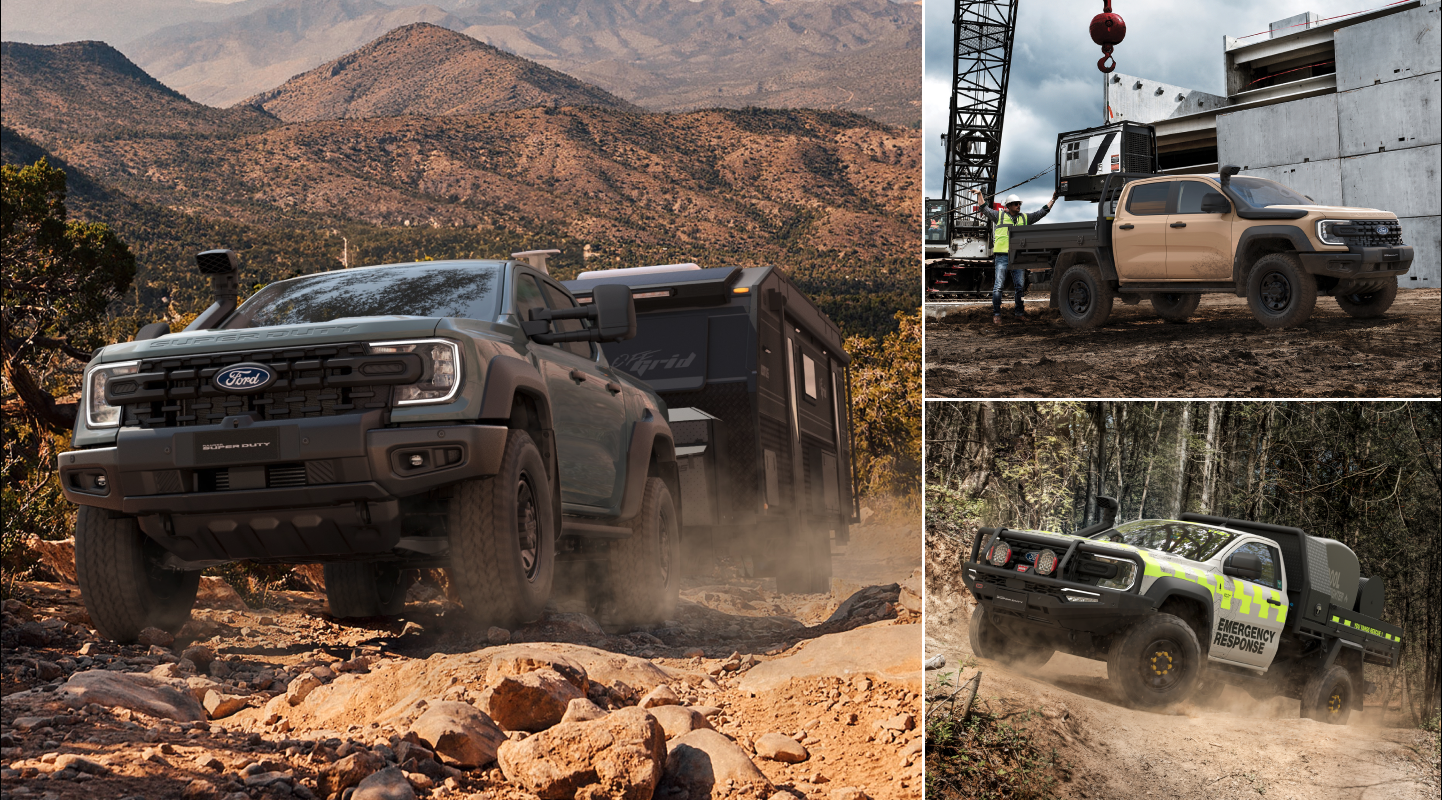
The biggest headline is the Ranger Super Duty’s 4,500kg braked towing capacity, an increase of one tonne over the 3,500kg towing limit common across the mid-size pickup segment. The vehicle also carries an 8,000kg Gross Combined Mass (GCM) rating.
That places the Ranger Super Duty closer to the capability traditionally associated with larger full-size pickup trucks than mainstream dual-cab mid-size pickup trucks.
For operators towing generators, compressors, earthmoving equipment or service trailers, the additional towing capacity could remove the need to deploy a light truck while retaining the agility needed on rural roads, construction sites and city streets.
Ford has also equipped the vehicle with towing-focused technologies including Pro Trailer Backup Assist, Smart Hitch, and Onboard Scales, helping reduce driver workload and improving confidence when towing heavy loads.
2. Ready for Remote and Rough Conditions
Many fleet vehicles spend as much time off-road as they do on sealed roads. Ranger Super Duty has been engineered with remote operations in mind.
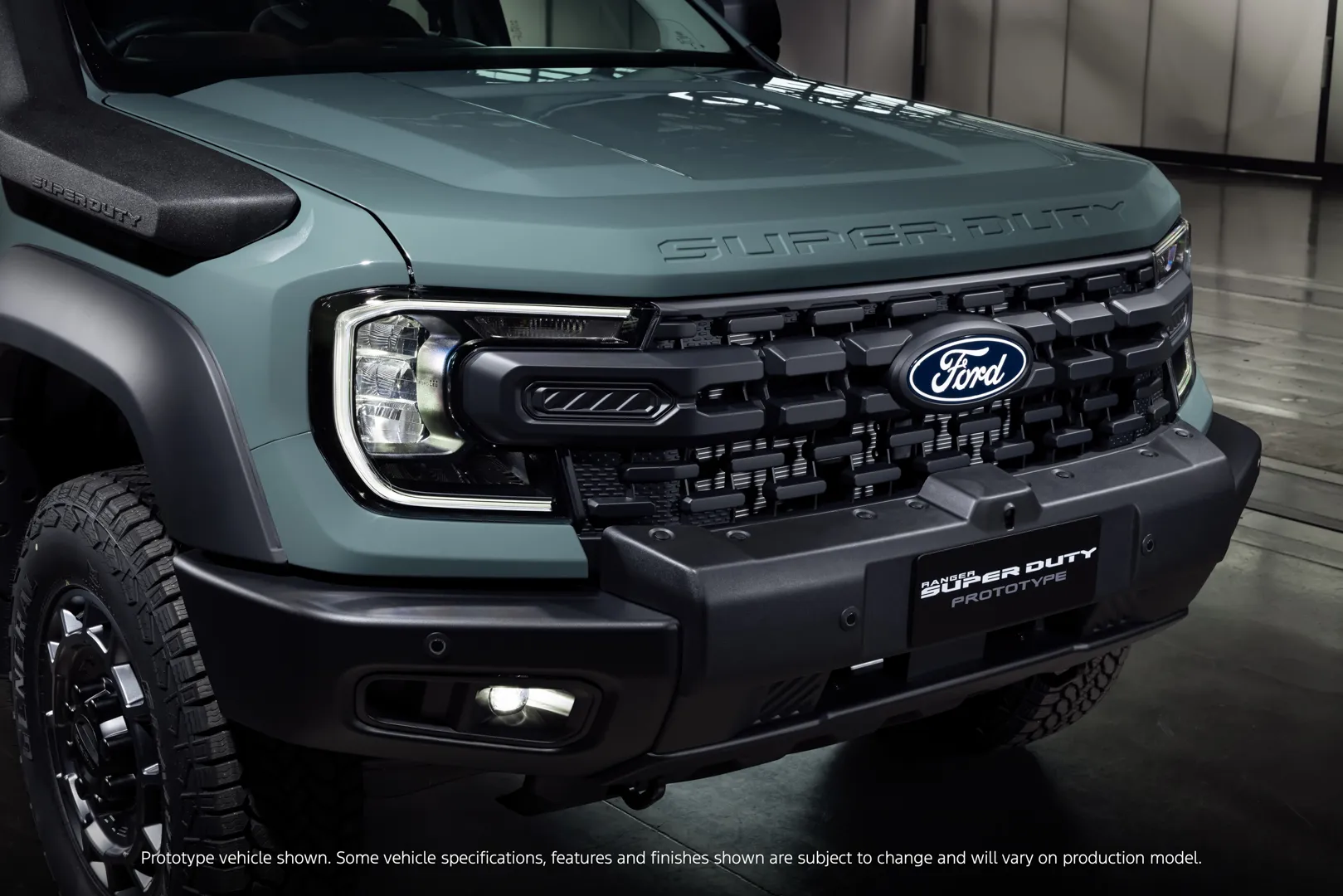
Key upgrades include 850mm water wading depth, up to 299mm ground clearance, 33-inch General Grabber all-terrain tyres, and available front and rear locking differentials. It also features reinforced steel underbody protection and dual recovery hooks for demanding conditions.
A notable upgrade is the move to eight-stud wheel hubs, a design more commonly seen on light trucks than traditional pickup trucks. The heavier-duty hubs help support the vehicle’s higher payload and towing ratings while improving durability under sustained heavy loads.
Compared with a conventional mid-size pickup truck, these upgrades give operators greater confidence when accessing mine sites, utility corridors, agricultural properties and remote infrastructure projects. The standard sealed snorkel also helps maintain engine airflow in dusty conditions while supporting the vehicle’s water-crossing capability.
3. Smart Driver Assistance
While capability figures attract attention, many fleet operators will focus just as much on productivity and ease of operation.
Ranger Super Duty includes several technologies designed to simplify daily tasks. Smart Hitch helps measure trailer ball weight during hookup, while Pro Trailer Backup Assist makes reversing with a trailer easier, especially for less experienced drivers.
The vehicle also features a 360-degree camera system, Cross Traffic Alert with Braking, and other driver assistance technologies carried over from the latest Ranger platform.
For fleets with drivers of varying experience levels, these systems can help reduce adjustment time and lower the risk of low-speed incidents while maneuvering trailers.
In practical terms, less time spent positioning trailers and more confidence when working around equipment can help improve utilization across the fleet.
4. Built to Carry More
The Ranger Super Duty’s payload capability is just as important as its towing capability for many fleet operators.
With a chassis reinforced with thicker-gauge steel and additional bracing, the Ranger Super Duty offers a 4,500kg Gross Vehicle Mass (GVM) rating and a payload capacity of up to 1,982kg. This extra capacity can allow businesses to carry significantly more equipment on a single trip or fit specialized service bodies without quickly reaching vehicle limits.
Power comes from Ford’s 3.0-litre turbo-diesel V6, producing 154kW and 600Nm, paired with a 10-speed automatic transmission and full-time four-wheel drive system. The powertrain also features heavy-duty calibration and upgraded cooling to support sustained operation under heavy loads.
To help manage loads, Ford has also included Onboard Scales, which estimate payload weight through the vehicle’s touchscreen. This gives drivers greater visibility of how much they are carrying and helps reduce the risk of overloading.
In summary, Ranger Super Duty offers payload capability approaching that of a light truck while maintaining the size and maneuverability of a pickup truck.
5. Massive Fuel Capacity
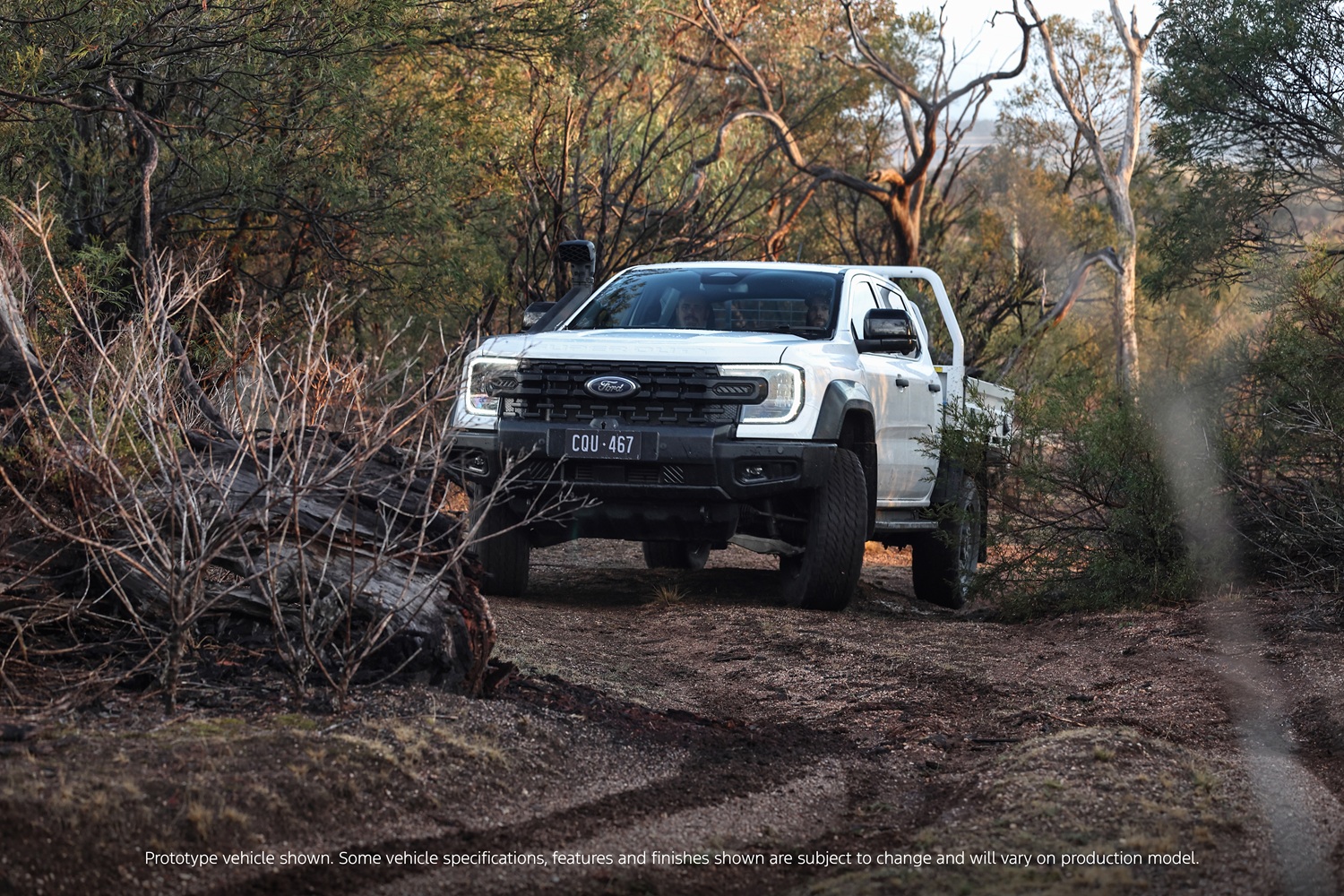
One of the most practical additions in Ranger Super Duty is the 130-litre fuel tank, fitted as standard and protected by heavy-duty shielding underneath the vehicle.
For comparison, a standard Ranger typically carries around 80 litres of fuel, meaning the Super Duty provides more than 60% additional fuel capacity.
For operators working in remote areas, that extra range can reduce refueling stops, simplify route planning, and improve productivity during long shifts.
Final Thoughts
For businesses that require greater towing, payload and off-road capability without stepping up to a larger truck platform, the Ford Ranger Super Duty presents a compelling option. Its combination of heavy-duty engineering, advanced driver assistance technologies and long-range practicality positions it as a purpose-built work vehicle designed to meet the demands of modern fleet operations.
By delivering capability levels that go beyond those of a conventional midsize pickup truck, Ranger Super Duty provides operators with more flexibility, improved productivity and the confidence to tackle demanding jobs across a wide range of industries.
Source: Discover Ranger Super Duty Features and Specs | Ford Australia